
Cornerstone 1 of 4
Physical Safety
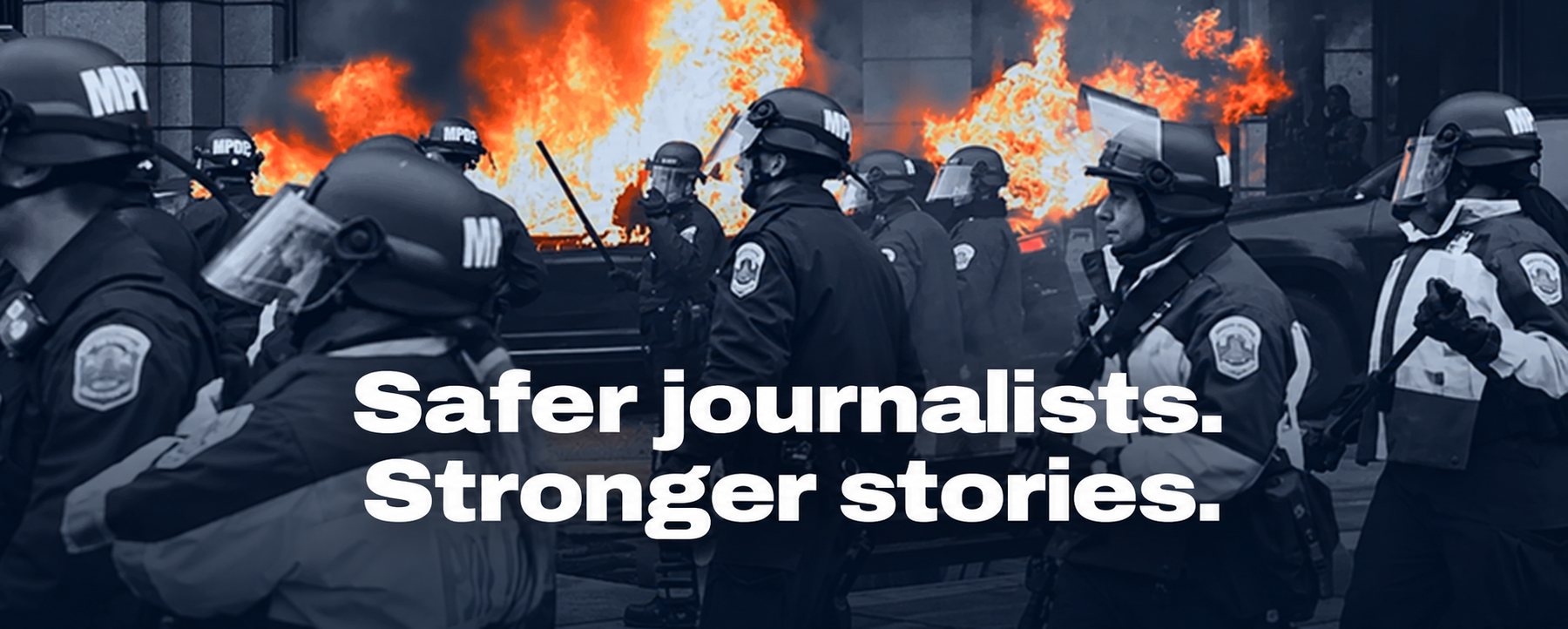
Journalists are injured at protests, in crowd surges, and on roads after hurricanes, as well as in war zones. Physical safety training teaches journalists to assess an environment and respond quickly when conditions change.
How we prepare journalists
- Situational awareness using the OODA loop, baseline versus anomaly, and Left of Bang, applied to real assignments.
- Civil unrest, protest, and riot: escalation indicators, law enforcement tactics including kettling and crowd control, gear and identification, legal rights, and arrest preparedness.
- Active shooter response: cover versus concealment, tactical movement, communication with law enforcement, and newsroom emergency planning.
- Movement and reaction: partner-based movement, identifying cover, reacting to direct and indirect fire, and blending to avoid unwanted attention.
- Natural disasters: unstable infrastructure, disrupted utilities, earthquake, flood, hurricane, wildfire, and landslide hazards, vehicle preparation, and the right protective equipment for each.
- Evacuation planning and checkpoint navigation, with digital and non-digital methods, redundant exit strategies, and escape and evasion plans.
- Personal protective gear: helmets, eye protection, respirators, body armor, and protective clothing, matched to the threat, including the limits of each.
- Kidnap avoidance and captivity psychology, and how gender, identity, and presentation change risk exposure in different contexts.
Where it is taught
Modules 11 through 21 of the HEFAT curriculum. Every course is discussion based and hands-on, with at least half the time spent on practical exercises.