Cornerstone 3 of 4
Trauma-Focused First Aid
When a journalist is hurt on assignment, the first person to respond is usually a colleague, and professional help can be minutes or hours away. Early bleeding control, chest wound care, and airway management improve the chance of survival. Our medical training covers the injuries journalists are most likely to see, including crowd-crush, blast, and gunshot injuries, and the austere conditions in which they occur.
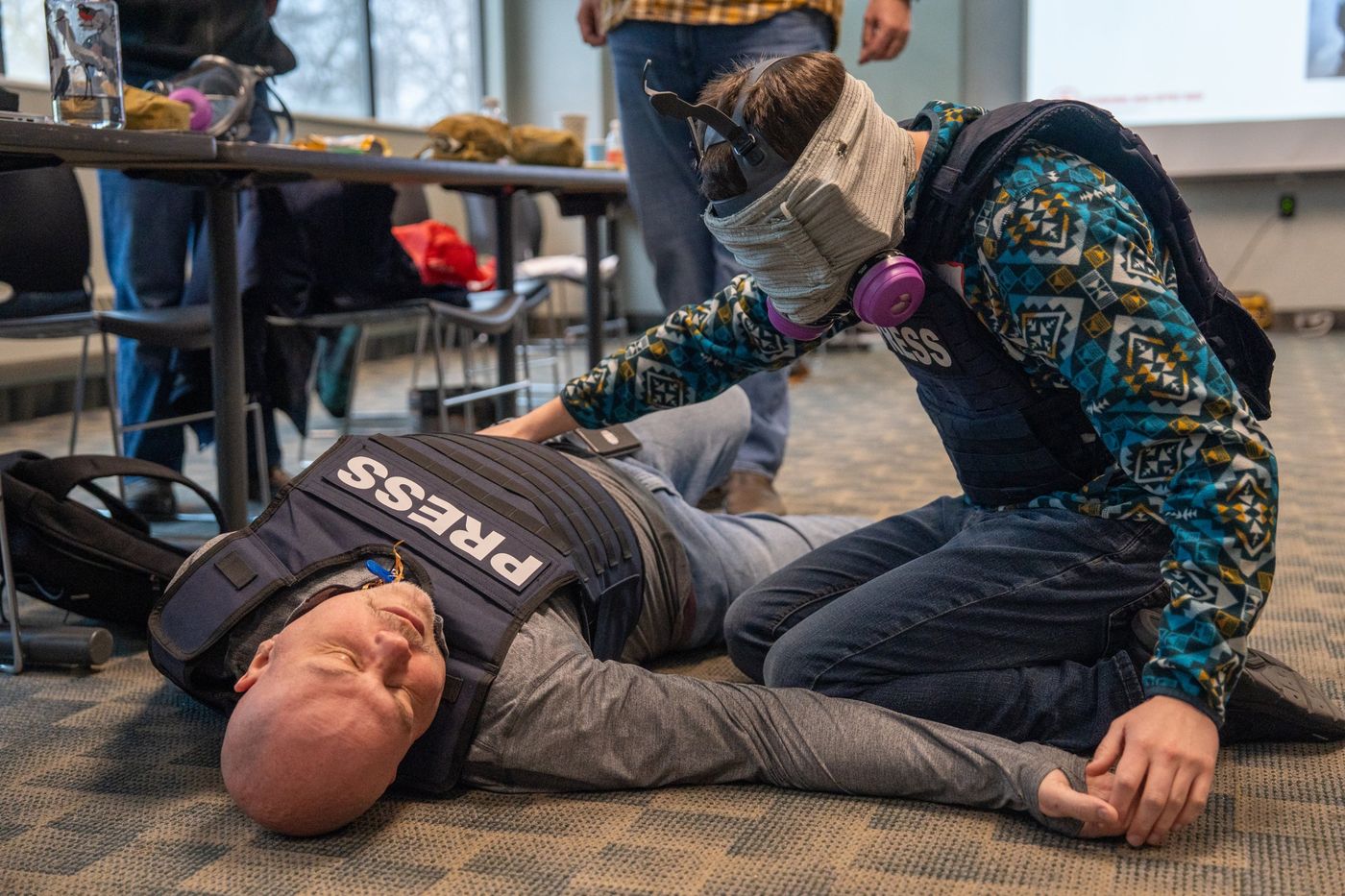
How we prepare journalists
- Responding to traumatic injuries: bleeding control with tourniquets, wound packing, and direct pressure; injury pattern recognition; field triage.
- Chest injuries and airway compromise: sucking chest wounds, closed chest trauma, chest seals, positioning, and airway management until help arrives.
- CPR, AED, and shock management, practiced in realistic scenarios.
- Fractures, burns, blast trauma, and concussion, using the MARCH algorithm (Massive bleeding, Airway, Respiration, Circulation, Hypothermia) and evacuation decision-making.
- Field hygiene, sanitation, water, and disease prevention for extended deployments and post-disaster environments.
- Building and carrying an individual first aid kit matched to the assignment, with team coordination for shared medical resources.
Where it is taught
Modules 2 through 7 of the HEFAT curriculum. Every course is discussion based and hands-on, with at least half the time spent on practical exercises.